Electrical Equipment Exporter Bangladesh: 2026 Buyer's Guide
How to source electrical equipment from Bangladesh: write the specification, verify the exporter and test evidence, sample, inspect and ship in order.
Short answer
An electrical equipment exporter in Bangladesh supplies products such as cables, switchgear, lighting and fans to overseas buyers. Orders succeed on a written specification, checked business and export documents including an Export Registration Certificate, test reports that name your product and standard, a sample approved in writing, and pre-shipment inspection before the goods leave.
On this page
Key takeaways
Start with a complete written specification: ratings, voltage and frequency, materials, required standard, testing, labelling and packing.
Verify the supplier, not the brochure: check a current ERC, consistent business documents and test reports for product, standard, laboratory and date.
There is no responsible single price, MOQ or lead time for electrical equipment: compare suppliers only on an identical specification.
Destination compliance is yours to confirm: EU, UK, US and UAE safety and marking rules differ and change over time.
Use a staged process: brief, shortlist, verify, sample, test, confirm in writing, inspect, then ship.
Finding a dependable electrical equipment exporter bangladesh is not mainly a search problem. It is a verification problem. Bangladesh suppliers offer cables, wiring accessories, switchgear, lighting, fans, motors and distribution equipment, but capability, testing discipline and export experience vary sharply from one factory to the next. The same product name can describe very different ratings, materials and quality control. This guide shows buyers in the United States, the United Kingdom, the European Union and the UAE how to write a specification, shortlist on evidence, check test reports and documents, and move from enquiry to shipment in a controlled order. An order that misses a rating, an insulation requirement or a destination safety rule can become a safety, liability and customs problem at the same time, so verification comes first: a written specification, checkable test evidence, consistent documents and a written agreement before production starts.
Why this matters for buyers and sellers
For buyers, electrical equipment sits at the high-consequence end of sourcing. Products must perform safely under load, in the voltage and frequency conditions of the destination, and often inside a wider system such as a building installation, an industrial line or a distribution network. A supplier who understands export markets asks about your destination, the standard you require and your testing expectations before quoting. A supplier who quotes at once on a product name alone is showing you how production will be controlled later.
For Bangladeshi sellers, the same discipline is an opportunity. Buyers pay for evidence: a clear product range, honest capacity information, traceable materials, testing described accurately and documents that match the goods. Suppliers who present that evidence plainly build repeat business where buyers are cautious about switching.
The category itself is broad, and that breadth causes confusion. In customs terms, most electrical machinery and equipment falls in Chapter 85 of the Harmonized System, titled "Electrical machinery and equipment and parts thereof".1 No single factory makes all of that well. Treat any supplier claiming to manufacture everything, at the lowest price, with immediate availability, as a claim to test rather than a shortcut.
Step-by-step: how it works
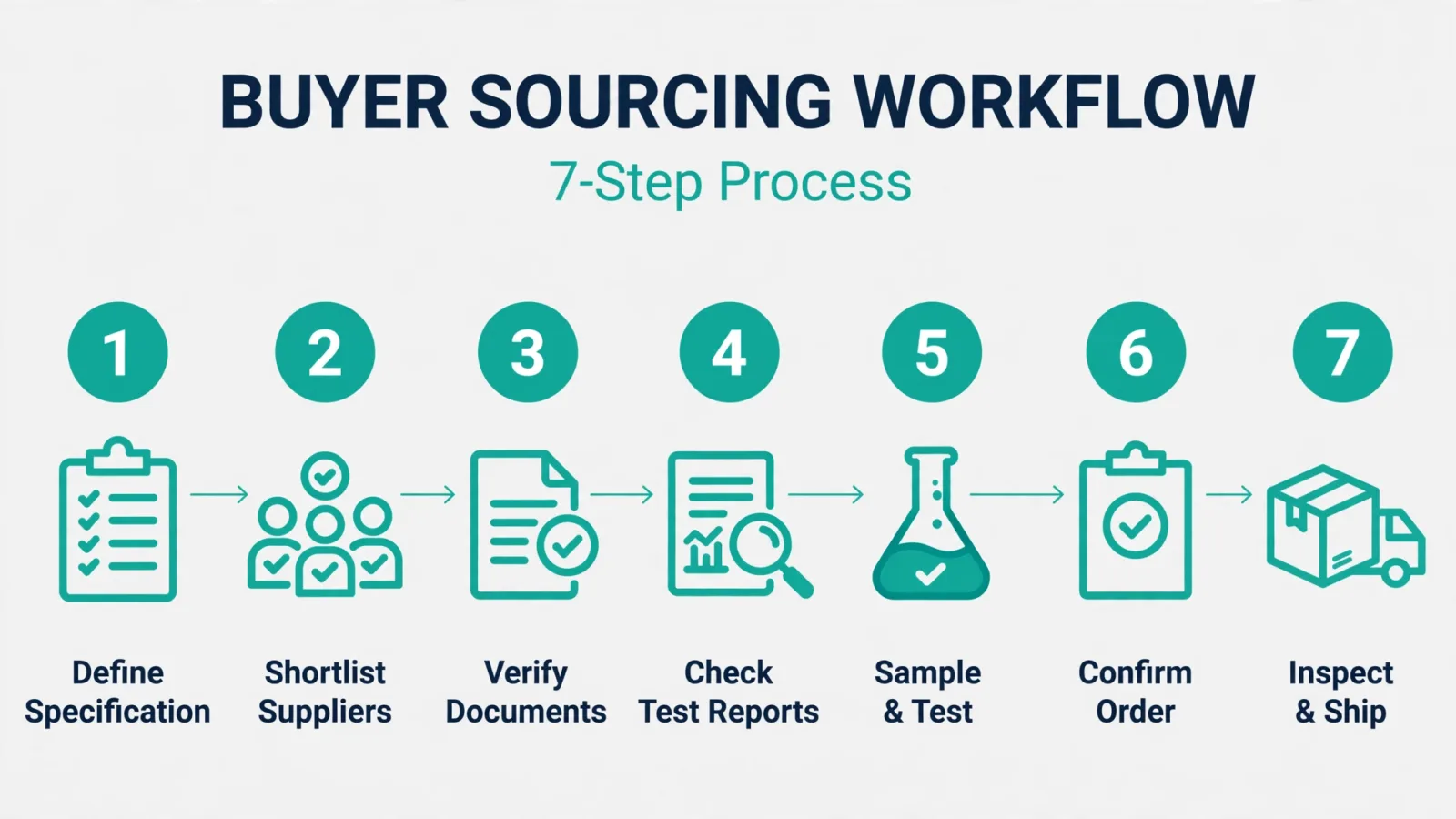
Step 1: Define the product technically. Write the specification before you search: exact product and function, rated voltage, current and frequency suitability for your destination, load rating where it applies, conductor or component materials, insulation or enclosure requirements, the standard you require, operating environment, labelling and packing. Add drawings or datasheets where you have them. Vague enquiries produce vague quotations that cannot be compared.
Step 2: Build a shortlist on evidence. Search supplier directories and industry sources, then filter by proven product match rather than category claims. You can browse suppliers on Exportain to start the search. Shortlist a small number of suppliers whose regular production already covers your product type, then send each one the identical specification.
Step 3: Verify the business and the factory. Request the same evidence pack from each supplier: business registration and export documentation, plus a factory profile covering product range, production and testing equipment, and main export markets. Check that the legal name and address are consistent across documents. Read how supplier verification works on Exportain alongside your own checks. Platform checks, document checks and product-specific checks each do different work.
Step 4: Verify testing and compliance evidence. For electrical goods, this step carries the order. Ask which tests are performed in-house, which by an external laboratory, and which standard each test follows. Request sample test reports for the same product family and check that each report names the product, the standard, the laboratory and a sensible date. Where a verification route exists with the issuer, use it. Confirm that the offered specification matches your destination voltage, frequency and labelling rules. If a supplier cannot explain its testing plainly, do not proceed on trust.
Step 5: Sample, prototype and test independently. Order samples built to the full production specification, not a showroom equivalent. Test against your specification, covering ratings, materials, workmanship, markings and documentation, using your own laboratory or an inspection provider where the risk justifies it. Approve in writing.
Step 6: Confirm the commercial agreement in writing. Record the specification, quantity, price basis, trade term with its named place, payment terms with a beneficiary matching the contracting business, testing and inspection arrangements, document list, packing and the shipment window in one confirmed document. Name the trade term using the Incoterms® 2020 rules, which clarify the tasks, costs and risks in delivery from seller to buyer.2 Electrical orders fail most often on an assumption, such as a rating or a standard edition, that was never written down.
Step 7: Inspect before shipment and check documents before departure. Book pre-shipment inspection in proportion to risk: quantity, workmanship, rating and marking checks, function or safety spot tests as specified, and packing verification. Where you use sampling, agree the Acceptance Quality Limit (AQL) in advance. ISO 2859-1 defines AQL as the maximum average percentage of defective items considered acceptable during random sampling, and uses it to set sample sizes and acceptance and rejection thresholds.3 See pre-shipment inspection for how to set the brief. Check document drafts before the goods leave, while corrections are still fast.
Costs, timelines and documents
What drives the cost of an order?
There is no responsible single price for electrical equipment, because price is built from your specification. The main drivers are conductor and component material type and grade, rating and construction, the standard and testing regime required, order volume, labelling and packing, and the trade term and destination. Two products with the same name can differ materially in cost because one uses a higher material grade or a more demanding test regime. Compare quotations line by line on the identical specification, quantity, packing and trade term, and ask each supplier to explain its cost drivers. Build the full picture with landed cost of imports from Bangladesh rather than comparing factory prices alone. Treat a quotation far lower than comparable quotes, with no explanation of materials or testing, as a verification question rather than a saving.
Minimum order quantity follows the same logic. It is usually set by production batch economics, material purchasing quantities, tooling or setup where it applies, and testing costs spread across the order. Ask each supplier to state its minimum in writing, and confirm whether it applies per product type, per rating or to the total order.
How long does an order take?
Timelines must be broken into stages: material procurement, production, testing, sampling and your approvals, inspection, packing, inland transport, export handling and international carriage. Approvals that sit with you affect the total as much as factory time. Require a stage-by-stage timeline in writing and confirm the production slot with the order. A shorter promised timeline is not better if it depends on skipping testing or inspection.
Which documents should you expect?
Document | What it does | Who provides it |
|---|---|---|
Written specification and order confirmation | Fixes ratings, materials, standard, quantity and terms | Buyer and supplier together |
Commercial invoice and packing list | States value, quantity and cartons for customs | Supplier |
Transport document | Evidences carriage, such as a bill of lading or air waybill | Carrier or forwarder |
Certificate of origin, where required or claimed | Attests where the goods were produced | Supplier, through the issuing body in Bangladesh |
Test reports and compliance documents | Evidence testing to the named standard for your product and destination | Supplier and its laboratory |
Inspection report | Records quantity, markings, function checks and packing before shipment | Your inspector |
Confirm the exact set with your freight forwarder and customs broker before shipment, check drafts early, and keep product descriptions consistent with the specification and the markings on the goods.
Bangladesh-specific rules and tips
On the Bangladesh side, an exporter must hold an Export Registration Certificate (ERC). The Bangladesh Trade Portal states that an ERC "is a mandatory requirement for business entities for the export of any kind of goods or products from Bangladesh", and that the Office of the Chief Controller of Imports and Exports (CCI&E) is the sole authority that provides it.4 Ask to see a current ERC during verification, and check that the name on it matches the contracting business and the payment beneficiary. The ERC itself is explained in ERC: Export Registration Certificate.
Standards in Bangladesh sit with the Bangladesh Standards and Testing Institution (BSTI). BSTI is the agency constituted for controlling the standard of service and quality of goods, and its functions include establishing national standards and providing testing facilities for goods and services.5 For your export order, what matters is not a logo in a brochure but the specific evidence behind your product: which standard it was tested to, by which laboratory, with what result, and whether that evidence satisfies your destination market.
Classification deserves the same care. The Harmonized System is an international nomenclature developed under the World Customs Organization (WCO), comprising about 5,000 commodity groups identified by a six-digit code, and it is applied by more than 200 administrations to set customs tariffs and collect trade statistics.6 Agree the six-digit heading for your product with the supplier and your broker early, because the code drives duty, documentation and any product-specific controls at destination.
Practical tips carry extra weight here. Visit or independently verify the factory where order value and risk justify it, and confirm the product is made at the address you verified rather than bought in from an unnamed source. Name materials precisely and require written approval for any change, because a substitution in a conductor, insulation or enclosure can change both performance and compliance. Plan communication around production milestones, such as materials in, production start, testing complete and inspection booked.
Destination compliance stays the importer's responsibility to confirm. As one example, the European Union Low Voltage Directive 2014/35/EU applies to electrical equipment designed for use with a voltage rating of between 50 and 1,000 V for alternating current and between 75 and 1,500 V for direct current.7 Under that directive, all electrical equipment on sale in the EU must bear the CE marking, the manufacturer must carry out a safety and conformity assessment and issue an EU declaration of conformity, importers must check that the assessment was carried out correctly, and the declaration and technical documentation must be kept for 10 years.7 Rules in the United States, the United Kingdom and the UAE differ, so confirm the current requirements for your market with your broker or compliance adviser before production.
Mistakes and red flags
The most common mistake is buying on a product name instead of a specification. Without ratings, materials and a named standard in writing, you have no basis for comparing quotations, approving a sample or inspecting the goods. The second mistake is treating a test report as decoration. A report for a different product or rating does not evidence your order. Check the product, standard, laboratory and date on every report.
Further red flags deserve a pause at any stage:
A supplier who will not identify where the product is made, or whose name and address shift between documents.
Prices far below comparable quotations with no explanation of materials or testing.
Pressure to skip sampling, testing or inspection.
Resistance to a written specification or a written order confirmation.
A payment request to a beneficiary that does not match the contracting business.
A sample that was not built to the production specification, offered as proof of production quality.
Avoid changing ratings, materials or labelling mid-production without a written change record.
Checklist
Technical specification written in full: product, ratings, voltage and frequency suitability, materials, required standard, testing, labelling and packing.
Shortlist built on proven product match, with the identical specification sent to every supplier.
Business and export documents checked, including a current ERC, with legal name and address consistent across the file.
Factory production and testing capability confirmed for your specific product type.
Test reports checked for product, standard, laboratory and date, and verified with the issuer where a route exists.
HS classification agreed at six digits with the supplier and your broker.
Destination safety, marking and documentation requirements confirmed with your broker or compliance adviser.
Sample built to the production specification, tested and approved in writing.
Commercial agreement records specification, quantity, price basis, trade term with named place, payment beneficiary, inspection, documents and shipment window.
Pre-shipment inspection booked, with an agreed AQL, covering quantity, markings, function checks and packing.
Document drafts checked before departure, with descriptions consistent across all documents.
FAQs
What should I know first about Electrical Equipment Exporter Bangladesh?
Know first that the category is broad and capability is product-specific. A factory strong in cables is not automatically strong in switchgear, motors or lighting, so match proven production to your exact product. Know second that verification is the core skill: a written specification, consistent business documents including a current ERC, and test evidence checked for product, standard, laboratory and date.
What are the typical costs and timelines?
There are no responsible typical figures across electrical equipment, because cost and timing are built from your specification. Price depends on materials and grade, rating and construction, the standard and testing required, order volume, labelling and packing, and the trade term and destination. Timelines depend on material procurement, production, testing, your approval speed, inspection and transport. Ask each supplier for a quotation and a stage-by-stage timeline against the identical specification, and confirm the agreed figures in writing.
Which documents are needed?
Expect business and export documentation for verification, including the supplier ERC, then a commercial invoice and packing list matching the actual goods, a transport document, a certificate of origin where required or claimed, and test reports or compliance documents for the product and destination. For EU orders within the Low Voltage Directive voltage range, that set includes the EU declaration of conformity and technical documentation behind the CE marking.7 Keep the specification, sample approval, order confirmation and inspection record in the same file, and confirm the exact set with your forwarder and broker before shipment.
What are the most common mistakes?
The most common mistakes are buying on a product name without a written specification, accepting test reports without checking that they name your product and standard, comparing prices quoted on different specifications, and skipping sampling or pre-shipment inspection to save time. Buyers also create problems by changing ratings, materials or labelling mid-production without a written change record.
Next steps on Exportain
Browse suppliers on Exportain to compare Bangladeshi electrical equipment suppliers by product, and follow how to buy on Exportain for the buying sequence from enquiry to order. When your specification is ready, post an RFQ so suppliers quote against the same written requirements.
Sources
- Harmonized System — Chapter 85. World Customs Organization (accessed )
- Incoterms® rules. International Chamber of Commerce (ICC) (accessed )
- ISO 2859-1:2026 - Sampling procedures for inspection by attributes — Part 1: Sampling schemes indexed by acceptance quality limit (AQL) for lot-by-lot inspection. ISO (accessed )
- Bangladesh Trade Portal FAQ: Export Registration Certificate (ERC). Bangladesh Trade Portal (accessed )
- Bangladesh Standards and Testing Institution. Banglapedia (accessed )
- Harmonized System. European Commission, (accessed )
- Directive 2014/35/EU on electrical equipment designed for use within certain voltage limits — summary. EUR-Lex, European Union (accessed )
About the author
Sourcing from Bangladesh?
Post a request for quotation and suppliers on Exportain can send you their quotes directly.
Post an RFQ