AQL (Acceptance Quality Limit)
Definition
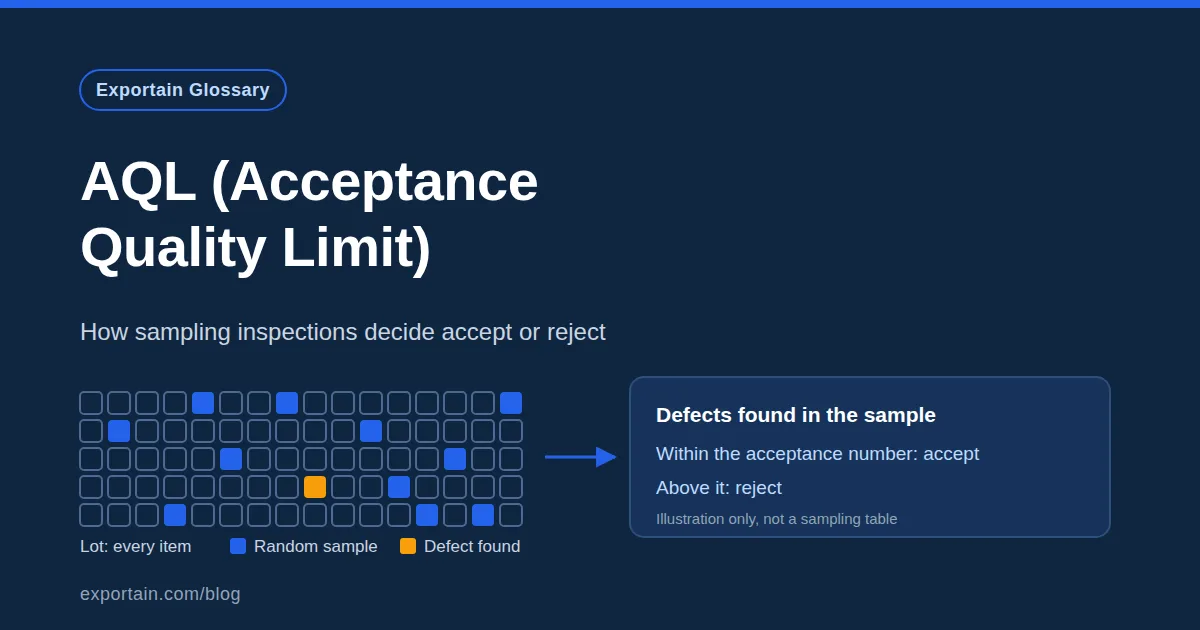
AQL (acceptance quality limit) is the quality level a sampling inspection is built around, stated as a percentage of nonconforming items or as nonconformities per 100 items. ISO 2859-1 indexes its sampling plans by AQL. For each plan, the inspector checks a random sample and accepts the lot if the defects found do not exceed the plan's acceptance number. The aim is to push the supplier to keep its process at least as good as the AQL.
Published 3 min read
On this page
In practice
How AQL works in an inspection
During a pre-shipment inspection, the inspector does not check every item. A random sample is drawn from the lot and each item is checked. The lot is accepted if the number of defective items does not exceed the level the plan allows. If it does, the lot is rejected1. The sampling plan fixes both the sample size and the acceptance and rejection numbers1, and ISO 2859-1 offers single, double and multiple sampling plans, all indexed by AQL2.
Two points from the standard matter for buyers:
It is designed for a continuing series of lots from one producer using one production process. Switching rules move inspection to tightened when quality slips, and allow reduced inspection or skip-lot sampling when quality stays consistently good2.
A one-off lot is a different case. The ISO 2859 series has a separate part, ISO 2859-2, with plans for isolated lots indexed by limiting quality (LQ)1. If you are placing a single order with a new supplier, ask your inspection company which approach fits.
Choosing AQL levels
There is no single right AQL. The standard itself says that choosing a plan takes experience, judgment, and some knowledge of both statistics and the product being inspected. It includes guidance to help with that choice and recommends using it alongside ISO 2859-0, which contains examples2.
In practice, agree three things with your supplier and inspection company before production:
Which defects count, and in which class. ISO 2859-1 has a section on classifying nonconformities2. A defect that makes a product unsafe or unsellable should not share a limit with a loose thread.
The AQL for each class. A lower AQL allows fewer nonconforming items and is stricter.
The standard and edition the inspector will sample to, written into the inspection booking and your purchase order.
Standards change. ISO 2859-1's third edition was published in 2026 and replaced the 1999 edition2, and BSI withdrew its identical adoption of the 1999 edition on 29 January 20261. Some inspection companies sample to the ANSI/ASQ Z1.4 standard instead. QIMA, for example, says it does3.
Reading an inspection report
Look for the lot size, the sample size, the AQL for each defect class, the number of defects found in each class, the accept and reject numbers, and the result. Then remember what a pass means. A sampling plan balances the supplier's risk of having a good lot rejected against your risk of accepting a bad one1. It limits your risk of accepting an occasional poor lot but does not remove it2. An accepted lot can still contain defective items. It means the sample stayed within the limit you agreed.
Related terms
Pre-shipment inspection: where AQL sampling is applied to finished goods.
LC (Letter of Credit): payment by a bank against the documents the credit requires.
How supplier verification works on Exportain: what Exportain checks. Exportain does not inspect goods4.
Sources
- BS 6001-1:1999+A1:2011 Sampling procedures for inspection by attributes - Sampling schemes indexed by acceptance quality limit (AQL) for lot-by-lot inspection (withdrawn). BSI (British Standards Institution), BSI Knowledge (accessed )
- BS ISO 2859-1:2026 Sampling procedures for inspection by attributes - Sampling schemes indexed by acceptance quality limit (AQL) for lot-by-lot inspection. BSI (British Standards Institution), BSI Knowledge, (accessed )
- Pre-Shipment Inspection (PSI) for Quality Control before Shipment. QIMA (accessed )
- About Exportain. Exportain (accessed )
Reviewed by Naim Islam
About the author
Sourcing from Bangladesh?
Post a request for quotation and suppliers on Exportain can send you their quotes directly.
Post an RFQ