Frozen Seafood Exporter Bangladesh: 2026 Buyer's Guide
Guide for Frozen Seafood Exporter Bangladesh with verification steps, red flags and how to shortlist on Exportain. Free guide from Exportain.
Published 11 min read
Short answer
A good frozen seafood exporter in Bangladesh is a verified business that can show a valid trade and export registration, a processing and cold-chain setup suited to frozen food, a clear product specification for species, size, glazing, and packing, and a complete set of export documents including a health certificate for the destination market. Shortlist several exporters, verify each one the same way, compare like-for-like specifications, and confirm inspection and document checks before shipment.

On this page
Choosing a frozen seafood exporter bangladesh buyers can rely on is not mainly about finding the longest supplier list. It is about verifying the exporter, the processing plant, the product specification, and the cold chain before any money moves. Bangladesh exports frozen shrimp and prawn, frozen fish, and other frozen seafood to buyers in the USA, UK, EU, and UAE, and the difference between a smooth first order and a rejected shipment usually comes down to checks made at the start.
This guide walks through those checks in order: what to ask for, which documents to expect, what drives costs and timelines, and how to shortlist suppliers on Exportain.
Quick answer
A good frozen seafood exporter in Bangladesh is a verified business that can show a valid trade and export registration, a processing and cold-chain setup suited to frozen food, a clear product specification for species, size, glazing, and packing, and a complete set of export documents including a health certificate for the destination market. Shortlist several exporters, verify each one the same way, compare like-for-like specifications, and confirm inspection and document checks before shipment.
Key takeaways
Verify the company, the processing plant, and the product separately — a registered exporter, a capable plant, and the right specification are three different checks.
Freeze the specification in writing: species, grade and size, net weight and glazing, processing style, packing, labelling, and destination requirements.
Protect the cold chain at every handover, from plant cold store to reefer container to destination cold store, and ask how temperature is monitored and recorded.
Compare total landed cost on identical specifications, not headline prices on different grades, glazing levels, or packing formats.
Use a structured shortlist: compare verified suppliers (https://exportain.com/suppliers) against the same checklist, then request quotes through one clear enquiry.
Why this matters for buyers and sellers: working with a frozen seafood exporter bangladesh
Frozen seafood is a food product, a perishable product, and an export-regulated product at the same time. That combination is why this category rewards careful buyers. A garment order with a minor packing error can often be corrected. A frozen seafood order with the wrong specification, a break in the cold chain, or a missing health certificate can lose value quickly, face delay at the border, or be refused by the destination authority.
For buyers, the stakes are practical. Your own customers — wholesalers, distributors, retailers, or food-service operators — expect consistent species, size, count, and safety controls from one shipment to the next. If the first container varies from the agreed specification, the problem reaches your customers before you can fix it. Careful sourcing is therefore not bureaucracy. It is how you protect repeat business.
For sellers in Bangladesh, the same checks work in their favour. An exporter that presents its registration, plant details, product range, and document process clearly will answer buyer questions faster and win trust.
Bangladesh has a long-established frozen seafood sector, centred on shrimp and prawn and a range of frozen fish. Buyers who check each link in that chain, rather than only the final price, source more successfully.
Step-by-step: how it works
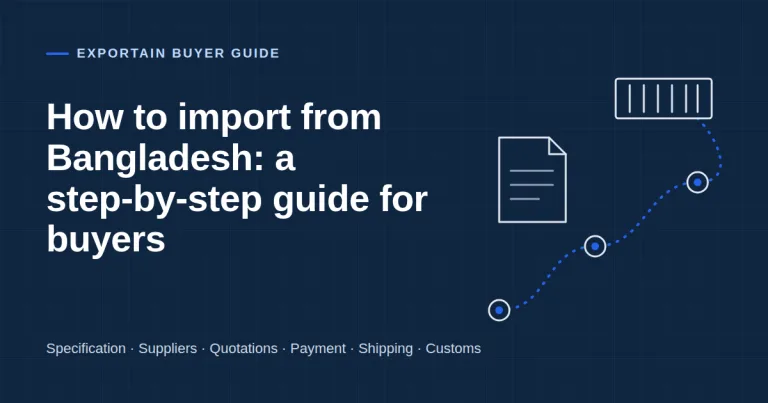
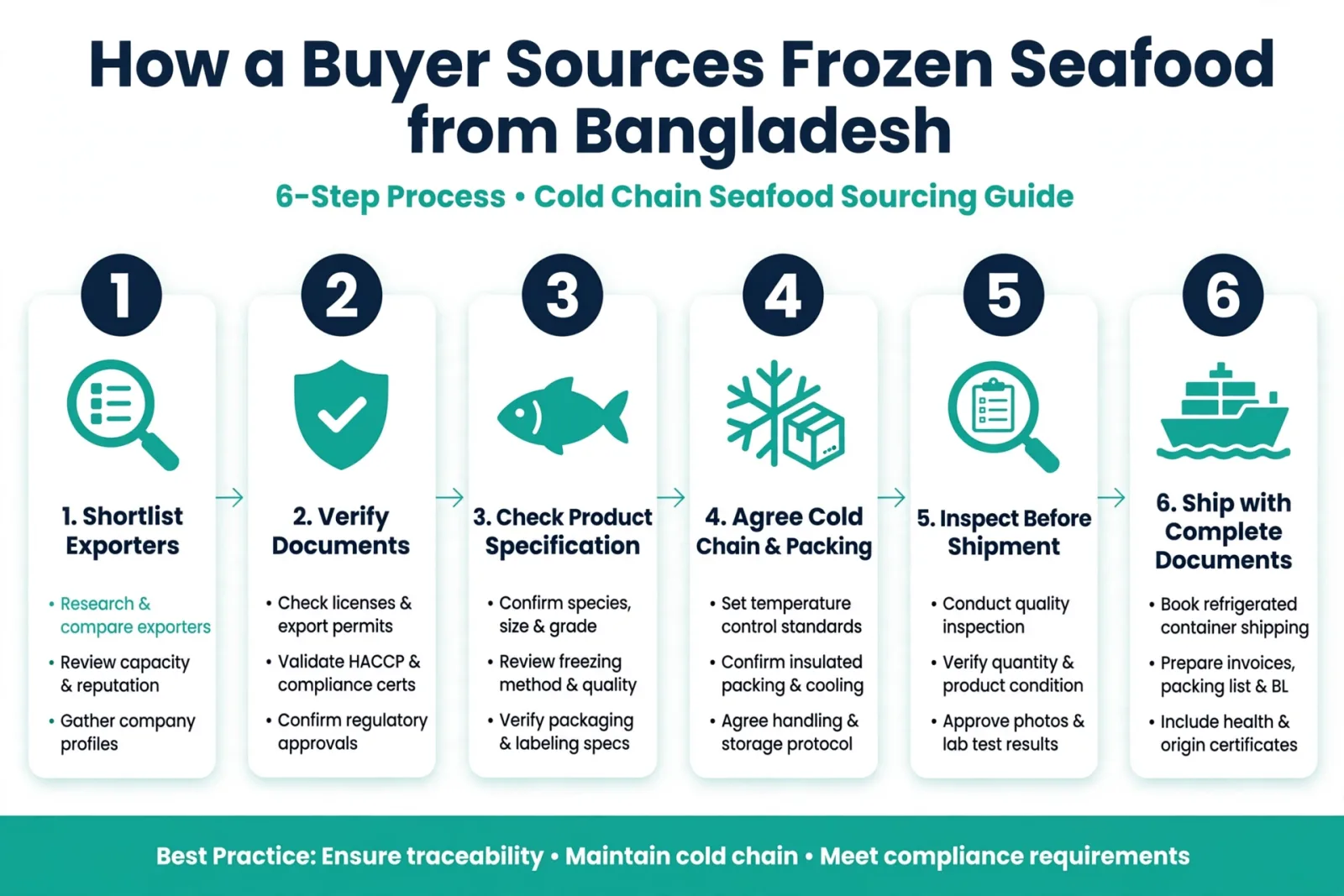
Step 1 – Define the product before you search. Write down the exact product you want to buy: species, whether it is farmed or wild-caught if that matters to your market, the processing style such as raw or cooked and peeled or shell-on for shrimp and prawn, the size or count grade, glazing level, net weight per pack, and retail or bulk packing format. A vague enquiry gets vague quotes that cannot be compared.
Step 2 – Shortlist exporters against one standard. Build a shortlist of exporters that actually handle your product, rather than general traders who may source it indirectly. On Exportain you can browse verified listings, compare what each supplier offers, and keep your shortlist in one place. However you find suppliers bangladesh-wide, apply the same questions to each candidate so the comparison is fair.
Step 3 – Verify the business and the plant. Ask for the company's trade licence and export registration details, the address of the processing plant, and who operates it. Confirm whether the exporter processes in its own plant or uses another facility, because that decides where your inspection and document checks need to focus. Exportain explains this process in its guide to how supplier verification works on Exportain (https://exportain.com/blog/how-supplier-verification-works-on-exportain), and its trust center (https://exportain.com/trust-center) sets out how trust and safety are handled on the platform.
Step 4 – Check food safety and traceability systems. Ask how the plant controls food safety: raw material inspection, hygiene routines, freezing and cold storage, laboratory testing arrangements, and batch traceability. Many export plants work to HACCP-style food safety management and destination-market requirements for approved establishments, but ask each exporter to evidence what applies to its own plant and your destination, rather than assuming it.
Step 5 – Agree the specification and sample. Put the full specification in writing and, where your process requires it, approve a sample against that specification before the main order. Confirm labelling, language requirements, shelf-life expectations on arrival, and any destination-specific marks or information your market requires. Most disputes in frozen seafood trace back to a specification that was assumed rather than agreed.
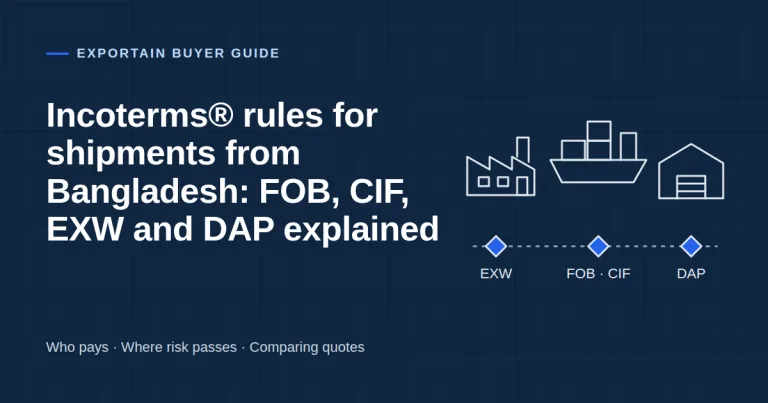
Step 6 – Agree commercial terms and the cold chain. Confirm price basis and trade term, payment terms, order quantity, production and shipment window, and exactly how the goods will stay frozen: cold store holding, loading procedure, reefer container settings, and temperature recording during transit. Also agree who arranges inspection, who books freight, and what happens if a document or inspection step fails.
Step 7 – Inspect, check documents, and ship. Before shipment, arrange a pre-shipment inspection proportionate to your order and risk, covering product, packing, labelling, and loading into the container. Check draft documents before the container sails, not after it arrives. Then track the shipment and prepare your import clearance while the goods are on the water.
Costs, timelines and documents
Buyers often ask for a single price and a single delivery date. In frozen seafood, both depend on choices you and the exporter make, so it is more useful to understand what drives them than to rely on a number quoted without a specification.
Costs are driven first by the raw material. Species, grade, size, and whether the product is farmed or wild-caught all change the underlying cost, and availability varies by season and catch or harvest conditions. Processing adds cost according to the work involved: cleaning, de-veining, peeling, cooking, grading, and packing formats all differ. Glazing and net weight definitions matter commercially too, because two quotes with different glazing or drained-weight bases are not the same offer even if the carton size looks identical. Reefer freight, cold-chain handling, inspection, testing, and documentation add to the export side; on your side, budget for import duty and taxes under your destination tariff, port and cold store charges, customs brokerage, and onward refrigerated transport. The only fair comparison is on an identical written specification, with the same trade term and destination.
Timelines are driven by raw material availability, plant scheduling, testing and document preparation where required, inspection booking, vessel schedules, and transit time to your port. A repeat order normally moves more predictably than a first order, because specification approval, labelling, and document formats are already settled. Build in time for document checking and your own import arrangements.
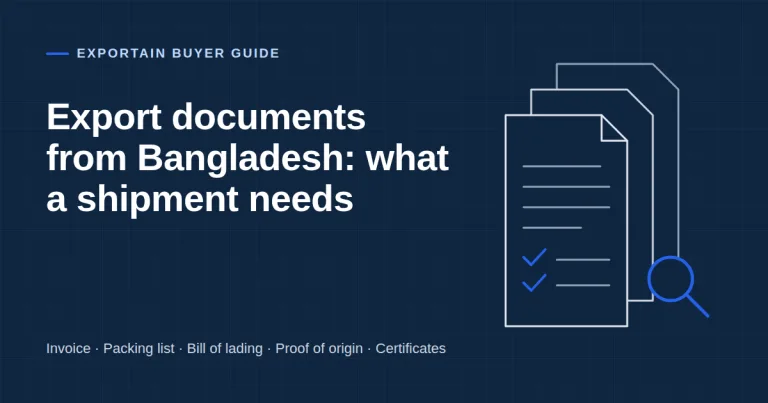
The documents you should expect for a frozen seafood export shipment typically include the following. Your destination and product may require more, so confirm the final list with your exporter, broker, and destination authority.
Commercial invoice – States seller, buyer, product description, quantity, and value for customs and payment
Packing list – Shows cartons, weights, and packing details carton by carton or in summary
Bill of lading – The carrier's transport document for the reefer container shipment
Certificate of origin – States where the goods originate, used by customs and for any preference claim
Health certificate – Official certification for the seafood consignment, issued through the competent authority route for the destination market
Product specification and test reports where required – Evidence that the consignment matches the agreed specification and any destination testing requirements
Keep copies of the specification, inspection report, and final document set together for each shipment. If a query arises at the border or with your customer, that file is what resolves it.
Bangladesh-specific rules and tips
Start with the export structure. Frozen seafood from Bangladesh moves through licensed exporters and processing plants, and consignments for regulated destination markets are prepared to meet those markets' establishment approval, certification, and labelling requirements. Those requirements differ between the USA, UK, EU, and UAE, and they can change, so the working rule is simple: name your destination market in your very first enquiry, and ask the exporter to confirm the certification and labelling route for that market specifically, rather than accepting a general assurance that the product is exported worldwide.
Seasonality and raw material supply deserve attention. Shrimp, prawn, and fish supply follows farming cycles and fishing patterns, so availability and grade mix can vary during the year. Buyers who share a realistic order plan with their exporter, rather than a single urgent request, give the plant a better chance to secure suitable raw material and schedule production properly.
Communication works best when it is written and specific. Use product names, grades, and packing terms exactly as they appear in your specification, confirm every change in writing, and keep one document as the agreed version. Unrecorded assumptions, not time differences, are the usual problem.
Finally, think beyond the first container. Exporters value repeat buyers who give feedback on each shipment, forecast future orders honestly, and pay on agreed terms — and a good plant usually prioritises such a buyer when raw material is tight.
Mistakes and red flags
The most common mistakes in this category are avoidable, and most of them happen before the order is placed.
Comparing prices without comparing specifications. Different species grades, sizes, glazing, or packing make a cheaper quote more expensive in practice.
Skipping plant verification. A polished catalogue or website is not evidence of a processing plant, a cold store, or an export track record.
Leaving the destination market unstated. Certification, labelling, and document requirements depend on where the goods are going.
Approving no sample or specification. Without an agreed reference, there is nothing objective to inspect the shipment against.
Ignoring the cold chain. Asking about product quality but not about cold storage, loading, reefer settings, and temperature records misses half the risk.
Checking documents after shipment. Errors found after sailing are slower and more costly to correct than errors found on drafts.
Red flags need a firmer response. Be cautious if an exporter will not identify its processing plant, if registration details do not match the name on quotations and invoices, if payment is requested to an unrelated personal account without a clear explanation, if evidence documents look altered, or if you are pressed to confirm a large first order before verification is complete. Each is a reason to pause and verify independently. If a deal depends on you skipping the checks in this guide, it is not a deal worth doing.
Checklist
Use this checklist for every new frozen seafood exporter, and again for every first order with an exporter you already know.
Product defined in writing: species, style, grade and size, glazing, net weight, and packing format
Destination market named, with its certification and labelling requirements confirmed
Exporter business registration and export status verified
Processing plant identified, and its food safety and traceability arrangements explained
Sample or reference specification approved where your process requires it
Price compared only against identical specifications and the same trade term
Cold-chain plan agreed: cold store, loading, reefer settings, and temperature records
Inspection scope and timing agreed for before shipment
Full document list confirmed, including the health certificate route for your market
Payment terms checked, with the payee name matching the contracting business
Draft documents checked before the vessel sails
How Exportain helps
Exportain helps buyers find suppliers bangladesh exporters have listed themselves, compare them in one place, and move from browsing to a structured enquiry. You can review verified supplier profiles, use the verification and trust information the platform provides, and then send one clear request that several matching exporters can answer against the same specification.
That structure matters in frozen seafood. When every exporter quotes on the same species, grade, glazing, packing, and destination, replies become comparable and your checklist becomes easier to complete. Exportain does not replace your own verification, inspection, or import responsibilities. It gives you a better starting point for doing those checks well.
Post a free RFQ on Exportain and get quotes from verified Bangladeshi suppliers → https://exportain.com/rfqs
FAQs
What should I know first about Frozen Seafood Exporter Bangladesh?
You should first know that a frozen seafood exporter in Bangladesh must be verified on three levels: the business itself, the processing plant it uses, and the exact product specification you are buying. You should also name your destination market at the start, because its health certification, labelling, and document requirements shape the whole order.
What are the typical costs and timelines?
Typical costs and timelines depend on the species, grade and size, processing and packing work, raw material availability, reefer freight, inspection and testing, and your destination's duty, taxes, and port charges. A first order also needs time for specification approval and document preparation, so you should agree a shipment-specific cost breakdown and timeline with your exporter rather than relying on a general estimate.
Which documents are needed?
The documents needed for a frozen seafood shipment typically include a commercial invoice, a packing list, a bill of lading, a certificate of origin, and a health certificate for the destination market. Your product and destination may also require specification records, test reports, or additional certificates, so you should confirm the complete list before shipment.
What are the most common mistakes?
The most common mistakes are comparing prices on different specifications, skipping verification of the exporter and its processing plant, and leaving the destination market's certification and labelling requirements unconfirmed. Buyers also make mistakes by approving no sample or written specification, ignoring cold-chain arrangements, and checking export documents only after the shipment has sailed.
Sourcing from Bangladesh?
Post a request for quotation and suppliers on Exportain can send you their quotes directly.
Post an RFQ