What Does a CIF Price Include? Cost Breakdown With a Real Example
Definition
CIF stands for Cost, Insurance and Freight. A CIF price covers the goods, marine insurance and freight to a named destination port, arranged and paid by the seller. The buyer still pays destination handling, import clearance, duties, taxes and onward delivery from the port.
By Naim Islam
Published 7 min read

On this page
If you have received a quote and wondered about the cif price meaning, you are not alone. CIF is common in sea freight, yet many buyers compare CIF quotes as if they were final delivered costs. They are not. This guide explains what a CIF price includes and excludes, who is responsible for each step, and how to compare quotes fairly.
Quick answer
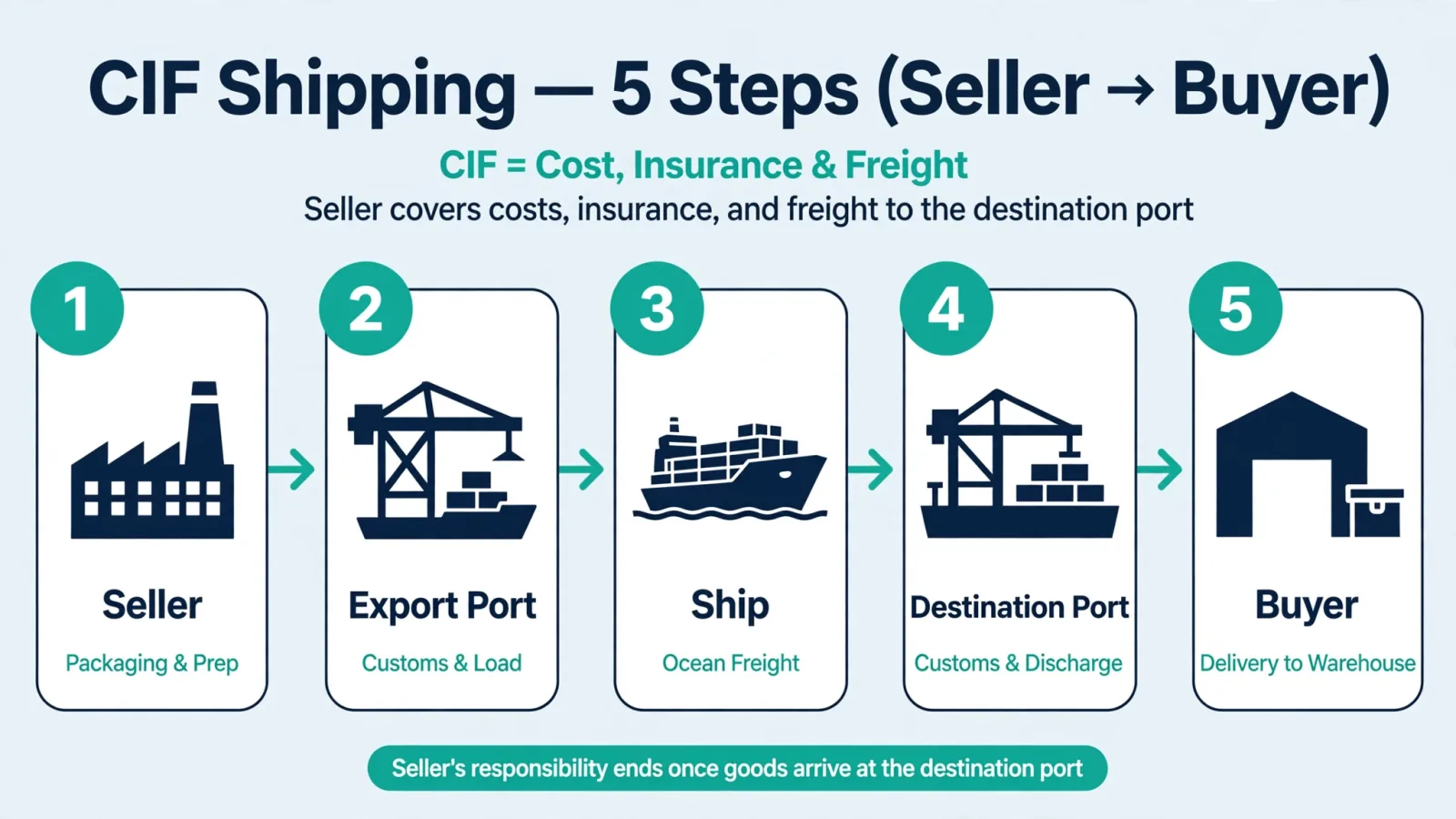
CIF stands for Cost, Insurance and Freight. A CIF price is the cost of the goods, plus marine insurance, plus freight to a named destination port. The seller arranges and pays for those three elements up to that port. The buyer still pays for destination handling, import customs clearance, duties and taxes where they apply, and delivery from the port to the final address, unless agreed otherwise.
What CIF means in plain English
Understanding the cif price meaning starts with the named port. A CIF quote should always name a destination port, for example CIF Rotterdam, CIF Felixstowe or CIF Jebel Ali. Without that port, you cannot tell how much freight is included or compare the quote fairly with another supplier's offer.
Under CIF, the seller's price bundles three things. First, the cost of the goods, including export packing and preparation for shipment. Second, insurance: the seller buys marine insurance for the journey, for the buyer's benefit. Third, freight: the seller books and pays the carrier to move the goods by sea to the named destination port.
What CIF does not mean is "delivered to my warehouse." The price stops at the destination port. Handling charges not included in the freight, import clearance, duties, taxes and onward haulage normally fall to the buyer — so a low CIF price can still produce a high final cost. CIF is a sea and inland waterway term; for air or courier shipments, a different Incoterm usually fits better.
See CIF — Cost, Insurance and Freight: https://exportain.com/blog/cif-cost-insurance-freight
How it works step by step
Step 1: Agree the term and the port. Buyer and seller agree the goods, quantity, packing, shipment window and the CIF destination port. The port, currency and documents to be supplied should appear in the pro forma invoice and purchase order.
Step 2: The seller prepares the goods. The seller manufactures or sources the goods, packs them for export, marks them as agreed, and prepares documents such as the invoice and packing list.
Step 3: Export clearance and loading. The seller arranges export customs clearance and delivers the goods on board the vessel at the port of shipment. This point matters: under CIF, risk passes to the buyer when the goods are on board, even though the seller still pays freight and insurance to the destination port.
Step 4: Freight and insurance. The seller contracts the carrier, pays ocean freight to the named destination port, and obtains the marine insurance document required under the contract.
Step 5: Documents are sent to the buyer. The buyer needs the bill of lading, invoice, packing list, insurance document and any agreed certificates. Check them carefully, as errors can delay clearance.
Step 6: The buyer clears and collects the goods. On arrival, the buyer, or the buyer's broker and forwarder, arranges import clearance, pays duties and taxes, settles destination charges not included, and arranges onward delivery.
Who is responsible for what
Table — Cost or task | Seller | Buyer:
Goods and export packing | Yes | —
Export customs clearance | Yes | —
Delivery on board the vessel | Yes | —
Ocean freight to named destination port | Yes | —
Marine insurance to destination port | Yes | —
Risk after goods are on board | — | Yes
Destination handling not included in freight | — | Yes
Import customs clearance | — | Yes
Import duties and taxes | — | Yes
Onward delivery to warehouse | — | Yes
Check your own contract, as parties can agree variations. Ask in writing which destination charges are already included, and confirm the scope of insurance — the seller's policy may not match the protection you would choose yourself.
For how CIF sits alongside the other terms, read our overview of Incoterms for shipments from Bangladesh: https://exportain.com/blog/incoterms-for-shipments-from-bangladesh
Worked example with numbers (Bangladesh shipment)
This illustrative example — not a quotation or market price — shows how a CIF price fits together for a sea shipment from Bangladesh to a named destination port.
Table — Element | Illustrative amount:
Goods, including export packing | 10,000 (contract currency)
Ocean freight from the Bangladesh port of shipment to the named destination port | 1,200
Marine insurance arranged by the seller | 80
CIF price to the named destination port | 11,280
The CIF price here is 11,280. Use that figure to compare this supplier's CIF offer with another CIF offer to the same destination port, on the same specification and terms.
It is not the buyer's final landed total. Add destination handling not included, broker fees, duty and tax, storage if clearance is delayed, and haulage — amounts that depend on the product, classification and destination rules, so calculate them case by case. Build a separate landed-cost calculation alongside every CIF quote: our guide to landed cost for imports from Bangladesh shows how: https://exportain.com/blog/landed-cost-imports-from-bangladesh
CIF vs related terms
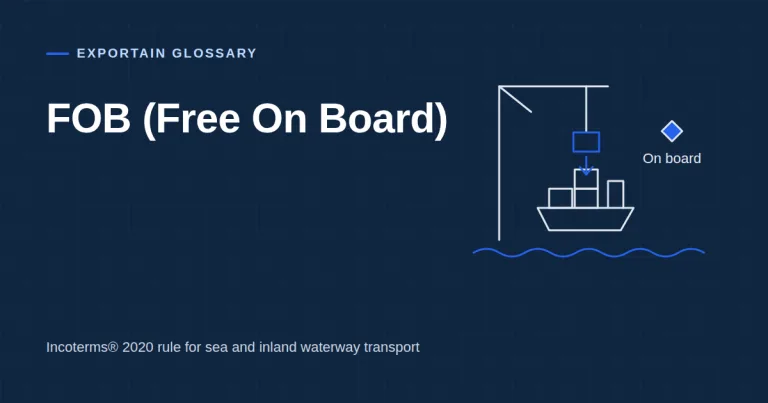
CIF vs FOB. Under FOB (Free On Board), the seller's price normally covers the goods and delivery on board at the port of shipment. The buyer then arranges and pays for ocean freight and insurance. FOB gives the buyer more control over carrier and rate; CIF gives a simpler bundled price to the destination port, but less visibility over the freight inside it.
CIF vs CFR. CFR (Cost and Freight) is similar, except the seller does not arrange insurance. With CFR, the buyer must arrange cover if cover is wanted.
CIF vs CIP. CIP (Carriage and Insurance Paid To) can be used for any transport mode and names a destination place rather than only a port. The seller pays carriage and insurance to that place, but risk transfers when goods are handed to the first carrier.
CIF vs DDP. Under DDP (Delivered Duty Paid), the seller also delivers in the buyer's country, including import clearance and duties. That convenience places obligations on the seller that many overseas suppliers cannot practically fulfil, so DDP offers need especially careful checking.
Common mistakes to avoid
Comparing CIF with a delivered price. The two cover different things. Normalise both to the same end point before deciding.
Accepting CIF with no named port. Without the destination port, the freight element is undefined. Always require the port in writing.
Assuming insurance equals full protection. Check the insured value, risks covered, claims process and who can claim. Arrange top-up cover if there is a gap.
Forgetting that risk passes on board. Loss or damage during the voyage is generally the buyer's risk under CIF, even though the seller paid the freight. That is why the insurance document matters.
Ignoring destination charges. Handling, clearance, duty, tax, storage and haulage can change the economics of an order. Estimate them before confirming, not after the ship arrives.
Using CIF for air or courier shipments. CIF is for sea and inland waterway transport. Choose a term designed for the mode actually used.
How Exportain helps
Exportain helps buyers request comparable quotes from verified Bangladeshi suppliers, with specification, quantity and destination port stated clearly from the start. When suppliers quote on the same basis, CIF offers are easier to compare. If you are new to the process, start with how to buy on Exportain: https://exportain.com/how-to-buy
FAQs
What is a CIF price?
A CIF price includes the cost of the goods, marine insurance and freight to a named destination port, arranged and paid for by the seller. The buyer normally pays for destination handling not included, import clearance, duties and taxes, and onward delivery from the port.
What does CIF price mean?
CIF means Cost, Insurance and Freight. The quoted price bundles the goods with insurance and sea freight to the named destination port. It does not mean delivery to the buyer's warehouse, and it does not include import duties and taxes unless the contract expressly says so.
What is CIF?
CIF is an Incoterm — a standard trade term used in international sale contracts. It defines who arranges and pays for transport and insurance, and where risk passes from seller to buyer. Under CIF, risk passes when goods are placed on board the vessel, while the seller pays freight and insurance to the destination port.
How does CIF work in practice?
The seller prepares the goods, clears them for export, loads them on board, books and pays freight to the named destination port, and arranges marine insurance. The seller sends the shipping documents to the buyer. The buyer then clears the goods through import customs, pays applicable duties and taxes, and arranges delivery from the port to the final address.
Is CIF used for shipments from Bangladesh?
Yes. CIF is commonly offered for sea shipments from Bangladesh, where the buyer wants the supplier to arrange freight and insurance to the destination port. Confirm the named port, documents, insurance cover, and which destination charges remain payable.
Ready to compare quotes on the same basis? Post a free RFQ on Exportain and get quotes from verified Bangladeshi suppliers → https://exportain.com/rfqs
About the author
Sourcing from Bangladesh?
Post a request for quotation and suppliers on Exportain can send you their quotes directly.
Post an RFQ