EXW (Ex Works)
Definition
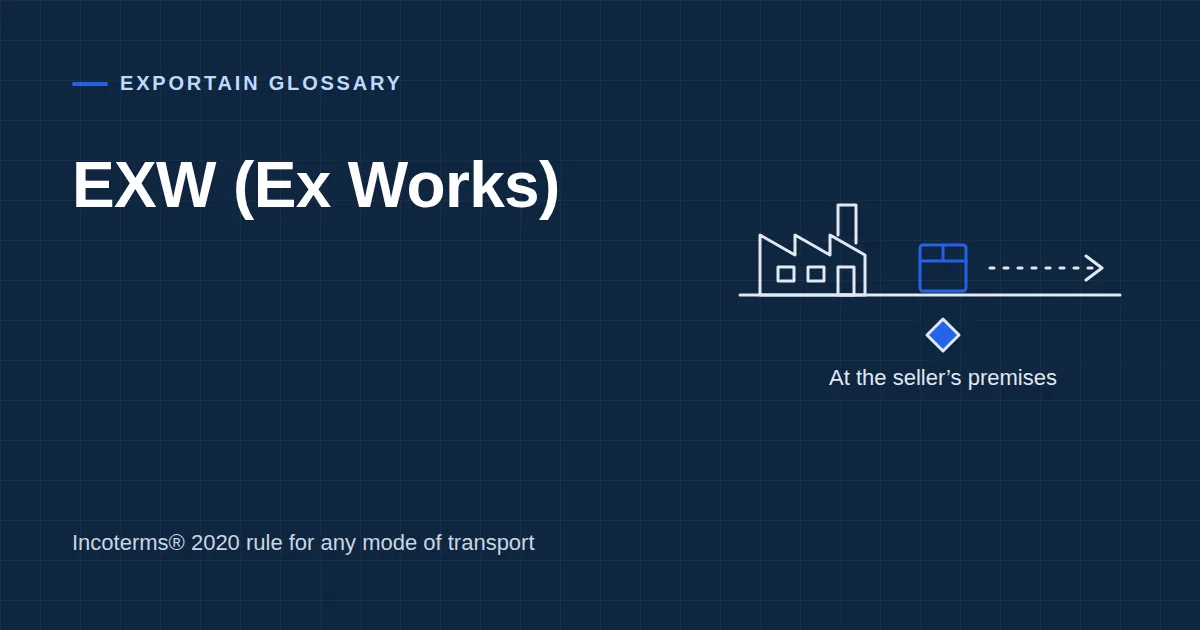
EXW (Ex Works) is an Incoterms® 2020 rule under which the seller makes the goods available to the buyer at its own premises or another named place, such as its factory or warehouse. The seller does not have to load them or clear them for export. From that point, the buyer handles loading, export clearance, transport, import formalities and the risk.
By Naim Islam
Published 2 min read
On this page
In practice
What the seller does, and what it does not
Under EXW, the seller's delivery is complete when it places the goods at your disposal at the named place, such as its own works, factory or warehouse. It does not have to load them onto your vehicle, and it does not have to clear them for export1. EXW can be used with any mode of transport, and under it the buyer carries out both export and import customs clearance and pays any tariffs2.
Because the seller's obligations stop so early, an EXW price is the bare price of the goods at the factory. It will look lower than an FOB or delivered price, but every cost after the factory door is still to come: collection, transport to the port, export clearance, freight, insurance, import duty and delivery.
Why EXW is hard for buyers based abroad
The difficult part of an EXW order from Bangladesh is the export side. Export clearance in Bangladesh becomes your job2, so you need a forwarder or agent there who can collect the goods, handle the export formalities and move the cargo to the port. The UK government's import guidance makes a related point for any importer: check that whoever is sending the goods is able to export them from their country3. Under EXW, that check has to cover the party you appoint to do it.
Loading needs attention too. Since the seller has no duty to load under EXW1, agree in writing who loads your truck at the factory and who bears the risk while it happens. That leaves no gap in responsibility at the factory gate.
Alternatives worth asking about
If you want to collect at or near the factory but do not want to handle export clearance, ask the supplier about FCA. Under FCA, the seller delivers the goods to the carrier you nominate at its premises or another named place1, and it handles export clearance2. HMRC advises naming the exact point within the place as precisely as possible, because the risk passes there1.
If you ship by sea and work with a forwarder, FOB also keeps export clearance with the seller2, and the supplier's price then covers transport to the port and loading4. The Incoterms® guide for shipments from Bangladesh compares these options side by side.
Related terms
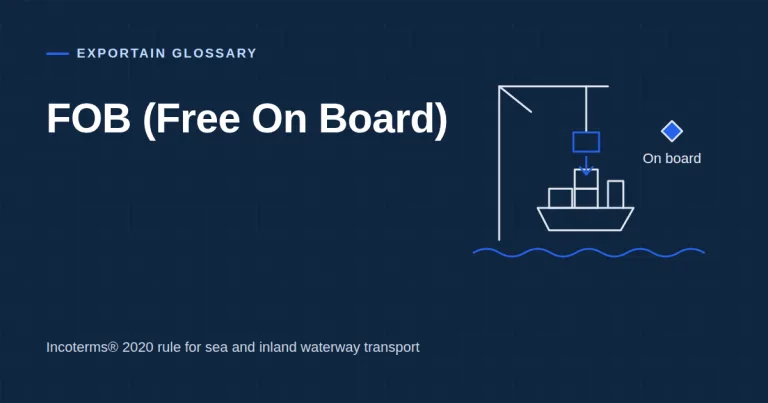
FOB (Free On Board): the seller clears export and delivers on board the vessel at the port of shipment.
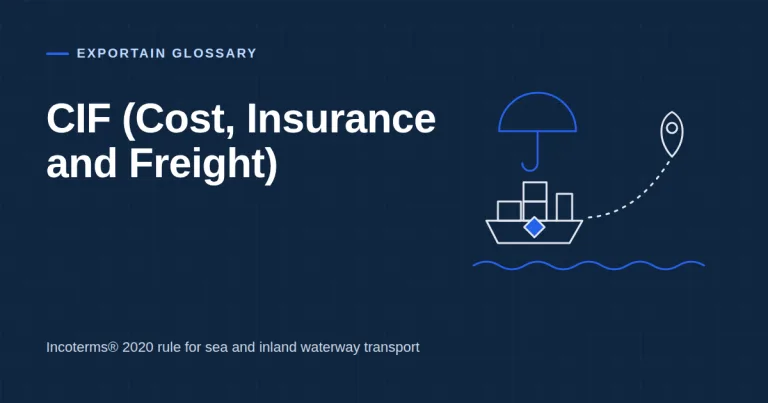
CIF (Cost, Insurance and Freight): the seller also pays freight and minimum insurance to the destination port.
Landed cost guide: how to price everything that comes after the factory door.
Incoterms® is a trademark of the International Chamber of Commerce. This entry summarizes the rule in our own words and is not the official text.
Sources
- Customs valuation: Incoterms. HM Revenue & Customs (GOV.UK) (accessed )
- Guidance Note: Using the Incoterms® 2020 Rules to Manage Tariff Risk in International Trade. International Chamber of Commerce (ICC) (accessed )
- Import goods into the UK: step by step. GOV.UK (accessed )
- Guide to import goods. European Commission, Access2Markets (accessed )
Reviewed by Nourin Tabassum
About the author
Sourcing from Bangladesh?
Post a request for quotation and suppliers on Exportain can send you their quotes directly.
Post an RFQ